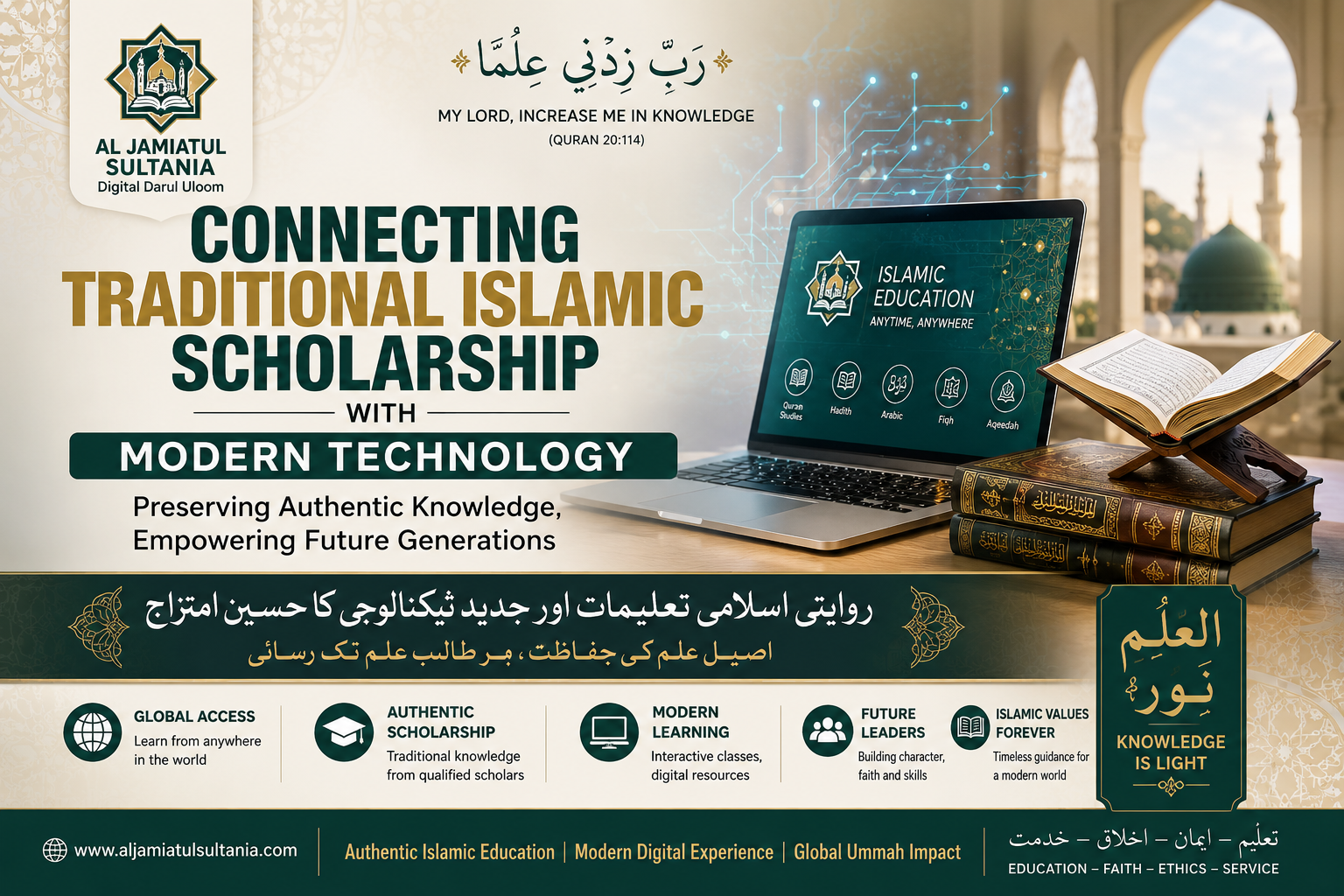
Preserving Sacred Knowledge in a Digital World
For over fourteen centuries, Islamic scholarship has illuminated minds, guided communities, and preserved authentic knowledge through generations of dedicated scholars. From the classical madrasas of the past to today’s digital learning environments, the mission remains unchanged: to seek, preserve, and share beneficial knowledge.
Today, technology has transformed the way people learn, communicate, and access information. While the world rapidly embraces digital innovation, the challenge for educational institutions is clear: how can we preserve the authenticity of traditional Islamic scholarship while utilizing modern technology to reach a global audience?
At Al Jamiatul Sultania Digital Darul Uloom, we believe the answer lies in combining the timeless wisdom of Islamic learning with the opportunities offered by modern digital education.
The Strength of Traditional Islamic Scholarship
Traditional Islamic education is built upon authenticity, scholarly chains of transmission, disciplined study, and moral development. Students learn not only information but also character, ethics, and spiritual responsibility.
Classical Islamic sciences include:
- Quranic Studies
- Hadith Sciences
- Arabic Language
- Fiqh (Islamic Jurisprudence)
- Aqeedah (Islamic Belief)
- Islamic History
- Islamic Ethics and Character Development
For centuries, these subjects have been taught through direct guidance from qualified scholars who dedicated their lives to preserving authentic Islamic knowledge.
The Power of Modern Technology
Technology has opened doors that were unimaginable just a few decades ago.
Students can now:
- Attend classes from anywhere in the world
- Access educational resources instantly
- Learn through interactive multimedia lessons
- Connect with teachers and fellow students globally
- Study at flexible times according to their schedules
Modern educational platforms make learning more accessible, organized, and efficient than ever before.
Building a Bridge Between Tradition and Innovation
The future of Islamic education is not about replacing traditional scholarship with technology. Rather, it is about using technology as a tool to strengthen and expand access to authentic Islamic learning.
A student in a remote village can now benefit from qualified scholars without leaving home. Working professionals can continue their Islamic studies alongside their careers. Families can access valuable educational resources that were once difficult to obtain.
Technology becomes a bridge that connects students to authentic scholarship while preserving the integrity of traditional Islamic learning.
Preparing Future Muslim Leaders
The modern world requires individuals who possess both strong Islamic values and contemporary skills.
Future leaders must be able to:
- Understand Islamic teachings deeply
- Navigate modern technological environments
- Communicate effectively across cultures
- Apply Islamic ethics to contemporary challenges
- Contribute positively to society
By combining authentic Islamic education with digital learning tools, students develop the knowledge, confidence, and skills necessary to lead with integrity in today’s world.
A Global Vision for Islamic Education
Our vision extends beyond geographical boundaries. We aim to create a learning environment where students from different countries, cultures, and backgrounds can benefit from authentic Islamic scholarship while embracing modern educational innovation.
Knowledge should not be limited by distance. Through digital platforms, the treasures of Islamic learning can reach students worldwide, helping to build stronger communities rooted in faith, knowledge, and ethical values.
Conclusion
Traditional Islamic scholarship and modern technology are not opposing forces. When used responsibly, technology becomes a powerful means of preserving, promoting, and expanding access to authentic Islamic education.
At Al Jamiatul Sultania Digital Darul Uloom, we are committed to connecting the rich legacy of Islamic scholarship with the opportunities of the digital age—empowering students with knowledge, faith, and the skills needed to thrive in the modern world.
Together, we can build a future where authentic Islamic learning remains accessible, relevant, and impactful for generations to come.
Discover how authentic Islamic scholarship and modern technology work together to provide accessible, high-quality Islamic education for students worldwide.


Al Jamiatul Sultania Digital Darul Uloom is a global Islamic education platform combining authentic Islamic scholarship with modern digital education. We provide free, certified courses in Quran Studies, Arabic Language, Islamic Finance, AI and emerging technologies — empowering Muslims worldwide.
 Website